
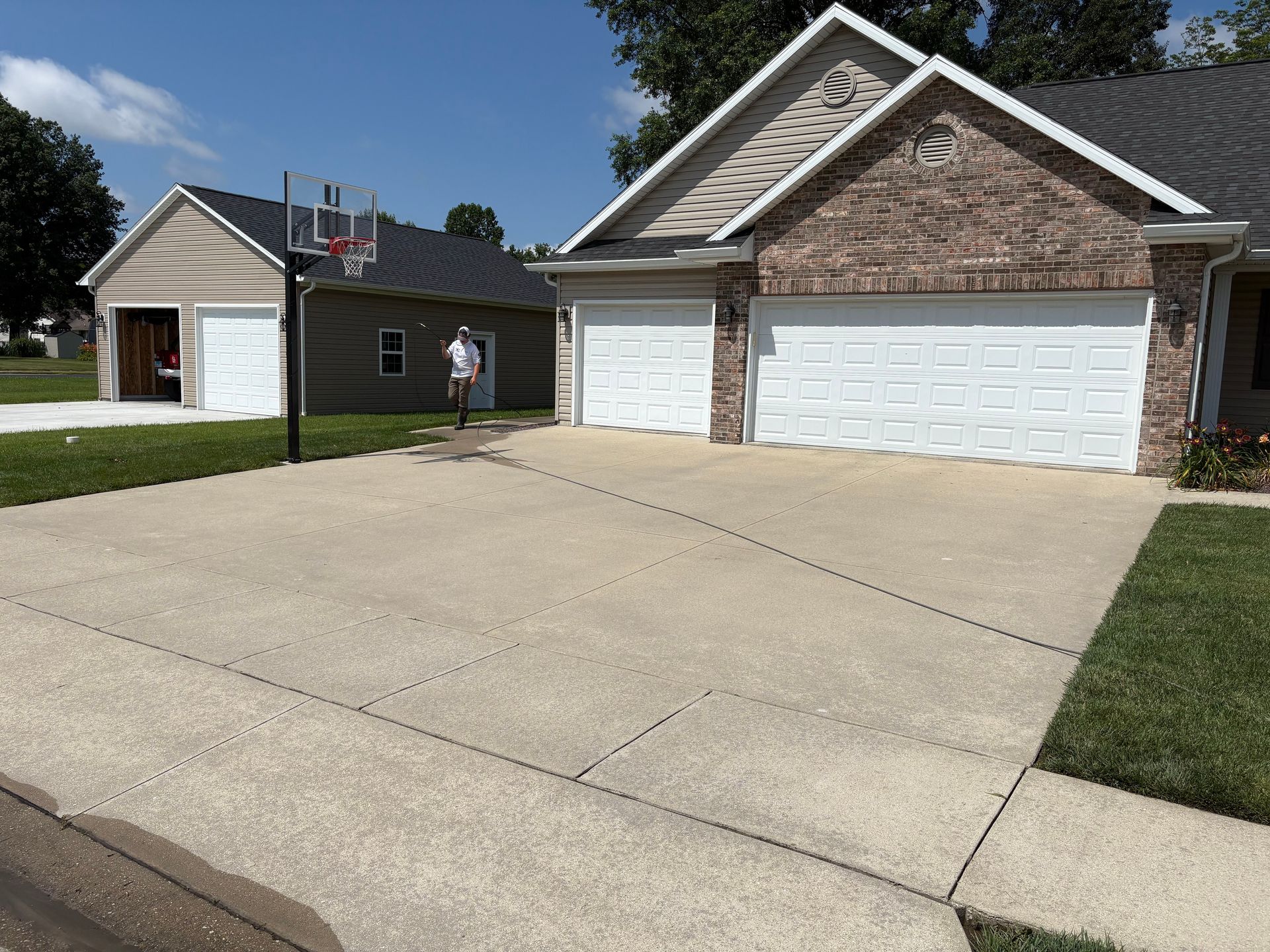
Driveways Restored to Original Brightness
Driveway Pressure Washing in Teutopolis for concrete and asphalt surfaces showing oil stains, tire marks, or algae buildup
Driveways collect dirt, tire marks, oil stains, algae, and surface discoloration that accumulate from daily vehicle use, seasonal debris, and exposure to Central Illinois weather patterns. Pressure washing removes these layers of buildup, restoring the driveway's original color and improving the overall appearance of the property's exterior. Salt Creek Softwash cleans concrete, asphalt, and paved driveway surfaces throughout Teutopolis, Newton, Effingham, and surrounding areas, addressing both residential and commercial properties where cleaner driveways directly improve curb appeal.
The cleaning process targets embedded dirt along edges, oil stains near parking areas, and algae growth in shaded sections where moisture lingers after rain. Pressure washing lifts these contaminants from the surface rather than simply spreading them around, and the results are immediately visible once the work is finished. Mud and organic matter that settle into porous concrete during spring rains or fall leaf decay are removed, leaving a uniform surface that looks freshly installed.
Request a driveway cleaning estimate based on your surface type and current condition.
Why Driveway Cleaning Improves Safety and Appearance
Pressure washing dislodges the embedded particles that cause discoloration and the slippery film that algae and mildew create on damp surfaces. The equipment applies enough force to remove tire marks and oil residue without damaging the concrete or asphalt underneath, and the water pressure reaches into surface pores where dirt hides beyond what rinsing alone can address.
Once the driveway is cleaned, the color contrast between the surface and surrounding landscape becomes sharper, and the entire front of the property looks better maintained. Homeowners notice that the driveway no longer appears gray or streaked, and the clean surface makes oil drips or new stains more obvious, encouraging quicker cleanup. The removal of algae buildup also reduces the slick layer that forms during wet weather, making the driveway safer to walk and drive on.
Seasonal debris, including leaves, pollen, and dirt tracked from nearby streets, settles into driveways throughout the year and bonds to the surface over time. Regular cleaning prevents this buildup from becoming permanent discoloration and extends the functional life of the pavement by removing contaminants that can degrade sealant or weaken surface integrity.
What Homeowners Ask About Driveway Cleaning
Property owners want to know how the cleaning process works and what results to expect based on their driveway's material and condition.
Salt Creek Softwash evaluates your driveway's material, staining, and surface condition before cleaning to determine the appropriate pressure settings and techniques. Schedule driveway pressure washing to restore a cleaner, brighter appearance that improves your property's overall presentation.
What types of driveways can be pressure washed?
Concrete, asphalt, and paved surfaces throughout the Teutopolis area are cleaned using pressure washing methods adjusted for the material's durability and surface texture.
How does pressure washing remove oil stains from driveways?
The combination of water pressure and cleaning agents breaks down oil residue and lifts it from porous concrete, though older or deeply penetrated stains may lighten rather than disappear completely.
When should driveways be cleaned to maintain appearance?
Most homeowners schedule driveway cleaning in spring after winter salt and debris have been cleared or in fall before leaves and moisture create new staining.
What happens to the dirt and debris removed during cleaning?
Runoff is directed away from landscaping and storm drains when possible, and debris is rinsed clear of the driveway surface so it doesn't resettle once the area dries.
How long does a cleaned driveway stay bright?
Driveways remain visibly cleaner for several months to over a year depending on vehicle traffic, shade exposure, and proximity to soil or vegetation that tracks onto the surface.