
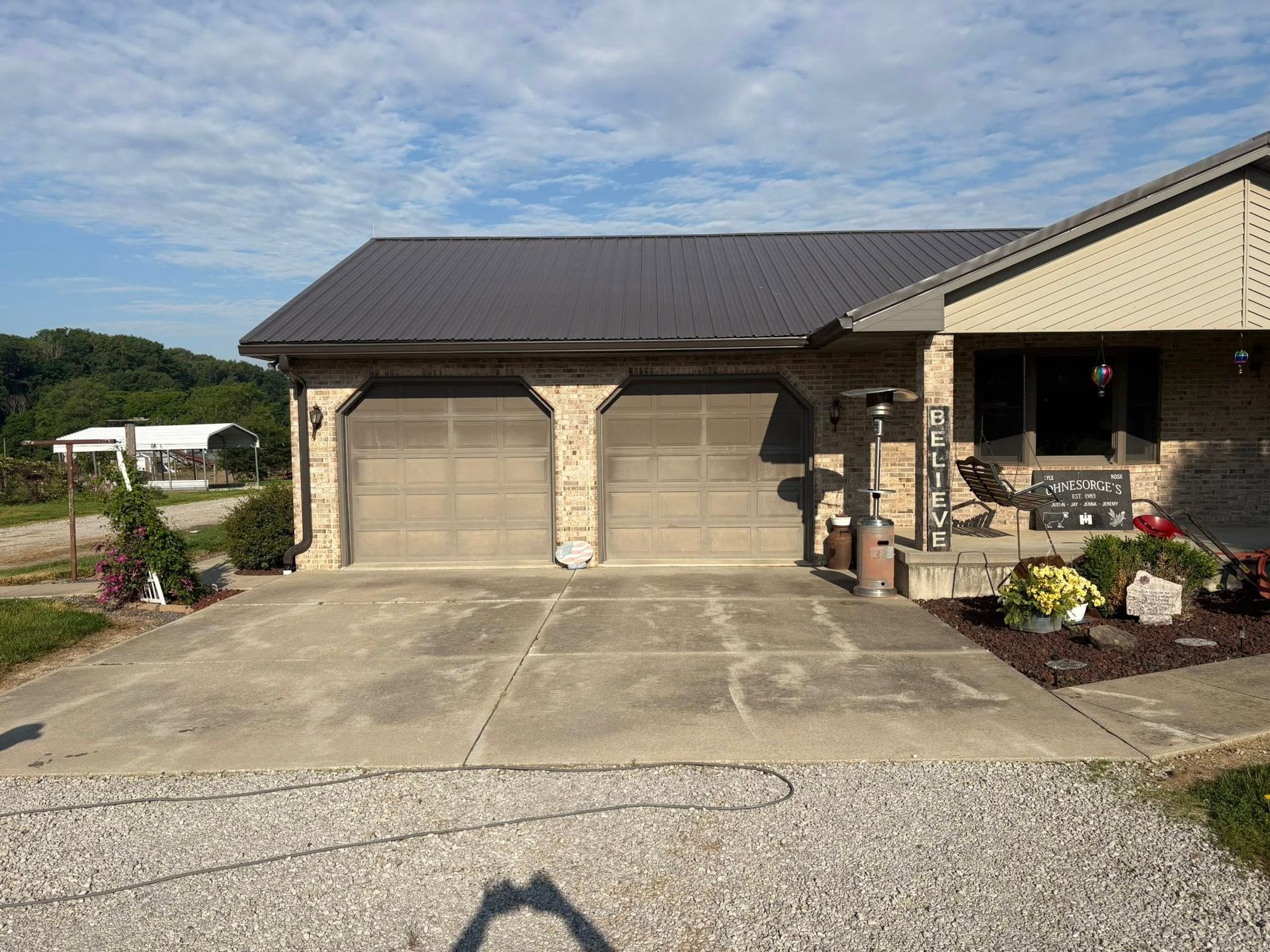
Roofs Cleaned Without High-Pressure Damage
Roof Washing in Teutopolis for asphalt shingle roofs showing black streaks, algae growth, or moss accumulation
Black streaks on asphalt shingle roofs are caused by Gloeocapsa magma, a type of algae that feeds on the limestone filler in shingles and spreads across the surface over time. Roof washing removes this algae along with moss and organic buildup using soft washing methods that clean thoroughly without the high-pressure damage that can dislodge granules, crack shingles, or shorten the roof's functional lifespan. Salt Creek Softwash provides roof washing services throughout Teutopolis, Vandalia, Effingham, and surrounding areas that improve roof appearance and help preserve roofing materials by eliminating the organic growth that accelerates deterioration.
Weather patterns in Central Illinois create consistent moisture and humidity that support algae and moss growth, especially on north-facing roof sections and areas shaded by trees. The black streaks become more visible each year as the algae colony expands, and the discoloration affects how the home looks from the street even when the roof still has years of life remaining. Homeowners often schedule roof washing when selling a property, after noticing visible staining, or as part of regular exterior maintenance to prevent buildup from worsening.
Request a roof washing estimate to address algae staining and restore your roof's cleaner appearance.
Why Soft Washing Protects Roofing Materials
Soft washing applies cleaning solutions that target algae growth at the cellular level, breaking down the organism without relying on high water pressure that can strip protective granules from shingles. The solution sits on the roof long enough to kill the algae and loosen moss, then rinses away completely, leaving shingles intact and functional. This approach avoids the damage that pressure washing causes, including granule loss that exposes the asphalt layer beneath and accelerates weathering.
Once the roof is cleaned, the black streaks disappear and the shingles return to a uniform color that matches their original installation appearance. Homeowners notice the roof looks decades newer, and the clean surface reflects more sunlight, which can reduce heat absorption during summer months. The removal of algae also stops the slow degradation that occurs when organic growth retains moisture against the shingle surface, creating conditions for rot and material breakdown.
Roof washing does not repair existing damage such as missing shingles, compromised flashing, or structural issues, but it does remove the algae and moss that contribute to ongoing deterioration. Property owners benefit most when scheduling service before the algae colony becomes so established that it has already caused material damage beyond what cleaning alone can reverse.
What Property Owners Usually Ask
Homeowners want to understand how roof washing works and whether it's safe for their specific roofing materials and current roof condition.
Salt Creek Softwash evaluates your roof's material, age, and current condition before cleaning to ensure the process is appropriate and effective. Arrange a consultation to discuss your roof's staining and receive a detailed estimate for professional roof washing service.
What causes black streaks on asphalt shingle roofs?
The streaks are caused by Gloeocapsa magma algae that feed on the limestone in shingles and spread across the roof as moisture and shade conditions allow growth to continue.
How does roof washing remove algae without damaging shingles?
Soft washing uses cleaning solutions that kill algae at the source and rinse away at low pressure, avoiding the granule loss and shingle damage that high-pressure washing creates.
When should roof washing be scheduled in Teutopolis?
Service can occur anytime during mild weather when temperatures allow the cleaning solution to work effectively and shingles are dry enough to treat safely.
What happens to the algae and moss after roof washing?
The cleaning solution kills the organisms and loosens their attachment to the shingles, allowing them to rinse away completely and preventing regrowth for an extended period.
How long does a cleaned roof stay free of black streaks?
Most roofs remain visibly cleaner for two to five years depending on shade exposure, humidity levels, and proximity to trees that contribute to moisture and organic debris accumulation.